
NIST 800-88 vs. DoD 5220.22-M: Which Data Destruction Standard Does Your Houston Business Need?
For the complete overview, start with our certified data destruction in Houston guide.
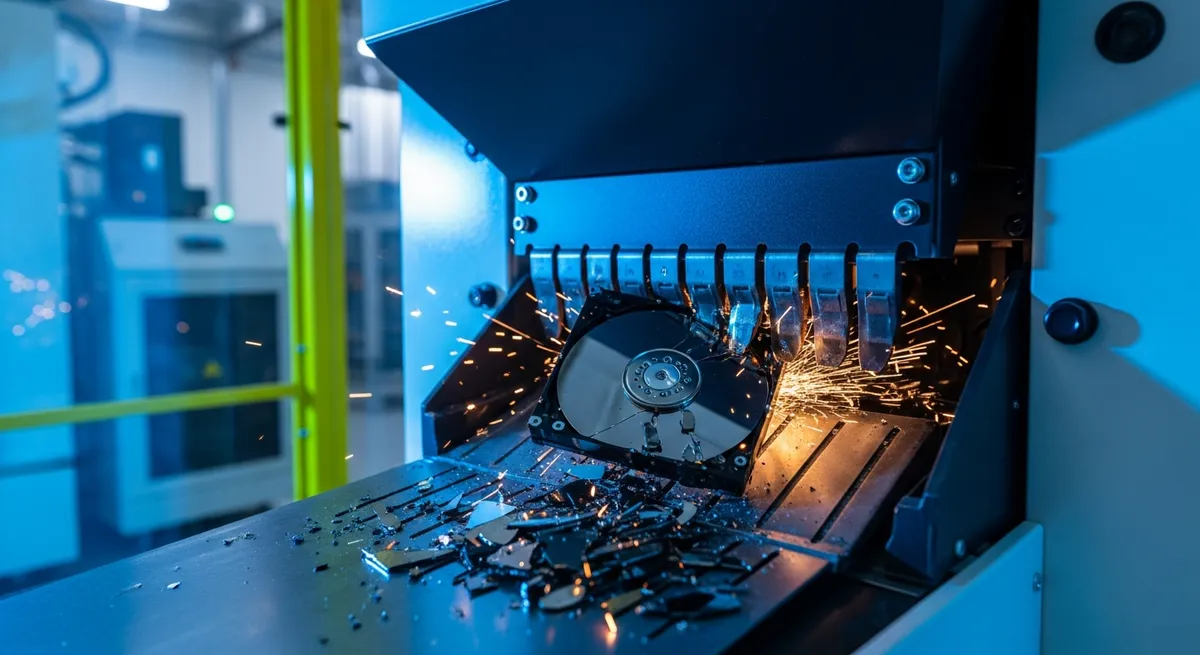
When it comes time to retire old office computers, servers, and hard drives, simply deleting files or formatting the drive is not enough. Houston businesses must ensure that sensitive data is permanently destroyed before the hardware leaves their control. But with different data destruction standards out there, how do you know which one to choose? The two most common standards are NIST 800-88 and DoD 5220.22-M.
Why "Delete" Is Not Data Destruction
When you delete a file or format a drive, the operating system simply marks that storage space as available. The actual data remains intact on the disk until it is overwritten. Forensic recovery tools can retrieve this data in minutes. For a Houston business disposing of old computers, this creates real legal and financial exposure, especially if those devices contain employee records, customer data, financial information, or protected health information.
This is why certified data destruction standards exist. They define exactly how storage media must be treated so that recovery by any known method becomes impossible. See our post on e-waste data security for Houston businesses for a broader look at the risks of improper disposal.
What Is DoD 5220.22-M?
The Department of Defense (DoD) 5220.22-M standard was once considered the gold standard for data wiping. It involves overwriting a hard drive with multiple passes of characters, typically three passes: writing zeros, then ones, then a random character, with verification after each pass.
While effective for older spinning magnetic hard drives (HDDs), the DoD standard is now largely outdated and insufficient for modern storage technology. Here is why:
- SSDs (solid state drives) use wear-leveling algorithms that distribute writes across cells. Multiple overwrite passes do not reach all cells the same way, leaving data residue in areas the overwrite missed.
- Overwriting an SSD multiple times can cause premature wear and may trigger firmware-level errors without guaranteeing complete erasure.
- The DoD itself retired the 5220.22-M overwrite standard in 2007. It is no longer an active DoD requirement.
What Is NIST 800-88 and Why Does It Matter?
Today, the National Institute of Standards and Technology (NIST) Special Publication 800-88 - titled "Guidelines for Media Sanitization" - is the widely accepted standard for data destruction across both government and private sector organizations. NIST 800-88 provides comprehensive, media-specific guidance across three categories:
| NIST 800-88 Method | What It Does | Best For |
|---|---|---|
| Clear | Overwrites accessible user-addressable storage with a pattern (e.g., zeros) | Low-sensitivity data on reusable media |
| Purge | Uses media-specific techniques (Secure Erase for SSDs, degaussing for HDDs) to remove data from all cells | Moderate-to-high sensitivity; preferred for SSDs |
| Destroy | Physical destruction: shredding, disintegrating, or incinerating the media | Highest sensitivity; drives that cannot be reused or purged |
NIST 800-88 focuses on verifying that data cannot be recovered by any known means, making it the preferred framework for enterprise IT departments, healthcare providers, legal firms, financial institutions, and government contractors operating in Houston and across Texas.
Which Standard Does Your Houston Business Actually Need?
For most modern businesses, NIST 800-88 is the right answer. The DoD 5220.22-M standard should not be used as the basis for SSD disposal and is not recognized by current federal or Texas state guidance on data sanitization. If your IT provider still quotes "DoD 3-pass wipe" as their standard, that is a warning sign.
Here is how to match the standard to your situation:
- Older spinning hard drives (HDDs): NIST 800-88 Clear or Purge (overwrite + degauss) is appropriate for reuse; Destroy for end-of-life.
- Solid state drives (SSDs): NIST 800-88 Purge using ATA Secure Erase or Cryptographic Erase; physical shredding for highest assurance.
- Mobile devices and tablets: Cryptographic Erase per NIST 800-88, followed by factory reset.
- Servers and RAID arrays: Component-level purge or physical destruction depending on classification level.
If you are in a regulated industry, check our Texas e-waste compliance guide to understand your specific legal obligations under HIPAA, GLBA, and the Texas Identity Theft Enforcement and Protection Act.
What a Certificate of Data Destruction Proves
A proper Certificate of Data Destruction documents the serial number of each device, the destruction method used, the date of destruction, and the name of the certified facility. This document is your proof of compliance if you are ever audited by a regulator, sued by a client, or involved in a breach investigation.
Without this documentation, you cannot demonstrate that your disposed hardware was handled properly, even if it was. Many Houston businesses discover this gap only after a breach or audit. Do not be in that position.
How We Handle Data Destruction at Free E-Waste Pickup Houston
At Free E-Waste Pickup Houston, we follow NIST 800-88 guidelines for all storage media collected from commercial locations. Our R2 Certified facility applies the appropriate sanitization method for each device type, and we issue a Certificate of Data Destruction upon request.
Our commercial pickup service is completely free. We serve businesses throughout Houston, Katy, Sugar Land, The Woodlands, the Energy Corridor, and across the Houston metro area. Check our full list of accepted items to confirm we handle your specific equipment.
For Houston businesses handling confidential client information, medical records, or financial data, NIST 800-88 compliance is not optional. It is your protection against a breach investigation and the foundation of a defensible data disposal policy.
Schedule Secure, Certified Pickup
Free commercial pickup, NIST 800-88 data destruction, and a Certificate of Destruction on request. No cost to your business, ever.
Related Data Destruction Guides
Find our articles useful? Add Free E-Waste Pick Up Houston as a preferred source on Google.